Description
Product Details
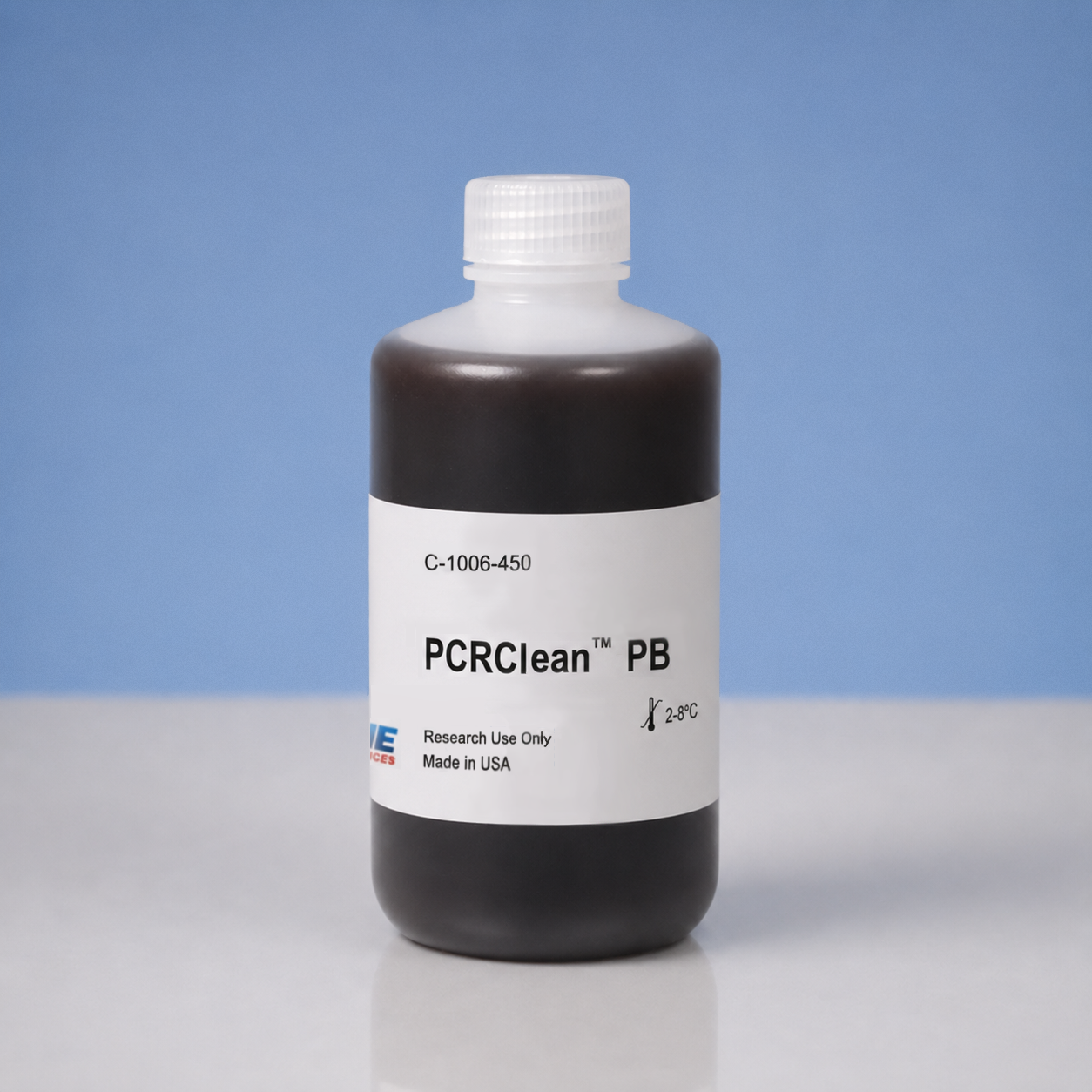
The PCRClean PB purification system utilizes proprietary paramagnetic bead technology for rapid, high-throughput DNA fragment purification. Specifically optimized for PacBio® SMRT® Sequencing workflows, this system serves as a direct replacement for AMPure® PB without requiring protocol modifications.
PCRClean PB delivers superior efficiency for adapter removal during PacBio® NGS library preparation and enhanced primer-dimer removal across diverse downstream applications. When compared to traditional filtration-based methods, this system ensures higher recovery efficiency across both small and large amplicon sizes, allowing users to maintain existing workflows while achieving improved purification results.
PCRClean PB is a sister product of PCRClean DX.
Key Features
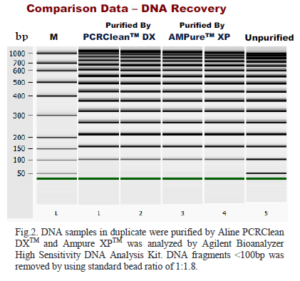
- Flexible clean-up: high recovery of amplicons with the option to choose recovery of >100 bp or >60 bp with modified protocol
- Efficient removal of unincorporated dNTPs, primers, primer dimers, salts and other contaminants
- Recovers amplicons greater than 100 bp with consistency and reliability.
- Processing time: 15 minutes/96 samples
- Scalable: tube, 96 and 384 well plate formatting can be used
Platforms
- Directly replaces Beckman Coulter and Agencourt’s AMpure PB
- Performs next generation sequencing using Pacific Biosciences’ platform
Datasheet
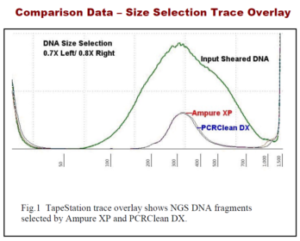
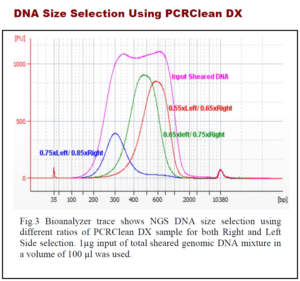
- Performance is similar to PCRClean DX (an AMpure XP direct replacement) View here.