Description
Product Details
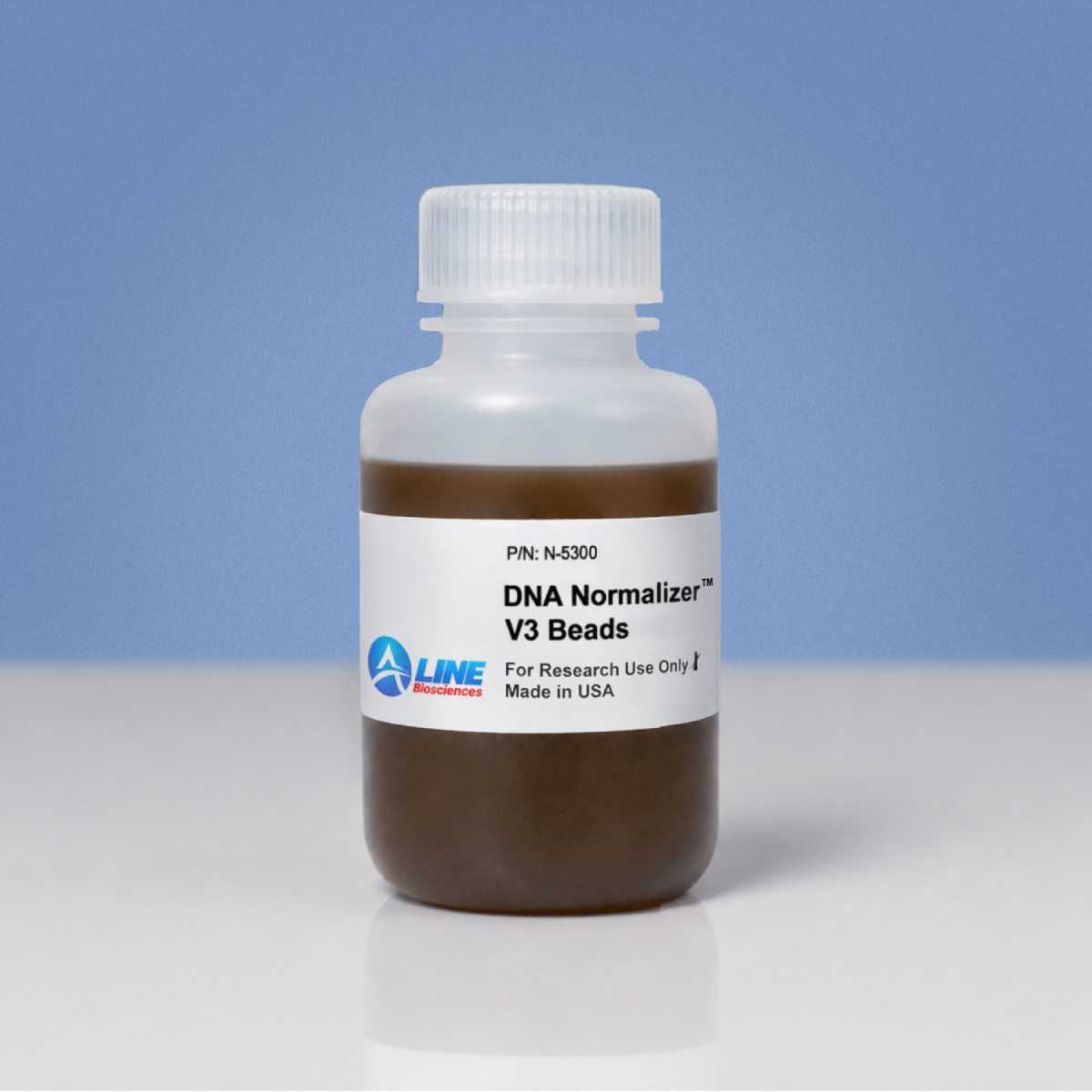
The patented DNA Normalizer Kit V3 streamlines automated DNA library normalization through Aline’s patented magnetic bead technology. This system isolates a pre-determined amount of DNA (output) from variable DNA inputs, allowing users to adjust yields to suit specific requirements.
By accomplishing DNA normalization during the purification process, the kit eliminates the need for additional DNA quantification and dilution. This unique normalization system significantly reduces time, labor, and reagent costs. It normalizes and combines DNA fragments from PCR amplification or enzymatic reactions in one simple process for next-generation library construction.
Note: The DNA output following the standard protocol is about 100ng per reaction. However, the output can be adjusted by end-users if desired.
Key Features
- Can be used in both PCR product and fragmented genomic DNA normalization
- Excellent dynamic range, as wide as 7 fold difference in input DNA concentration
- No more Picogreens; saves time and labor
- Multiple simultaneous actions: normalization, clean-up, and concentration
- Consistent normalization result
- Manual and automation-friendly
- Scalable for both tube, 96 well plate formats.
- Yields double-stranded DNA
- Suitable for exon capture as well and any other molecular engineering applications
Platforms
- Compatible with ALL next-generation sequencing platforms
Process Overview
The protocol mainly consists of binding, washing and elution steps, and can be performed directly in the thermal cycling plate. It requires no centrifugation or filtration. The process can be automated for high throughput applications.
- Bind PCR products to magnetic beads, then separate beads on magnet plate.
- Wash beads with ethanol to remove excessive DNA, nucleotides, salts, and other contaminants.
- Elute DNA.
Advantages of DNA Normalizer V3 vs. DNA Normalizer V2
- Optional: extra primer dimer/adapter removal reagent is available as add-on
- Extended shelf life: to 12 months
- Minimum input DNA quantity: only twice the targeted output DNA is required